
Blooming
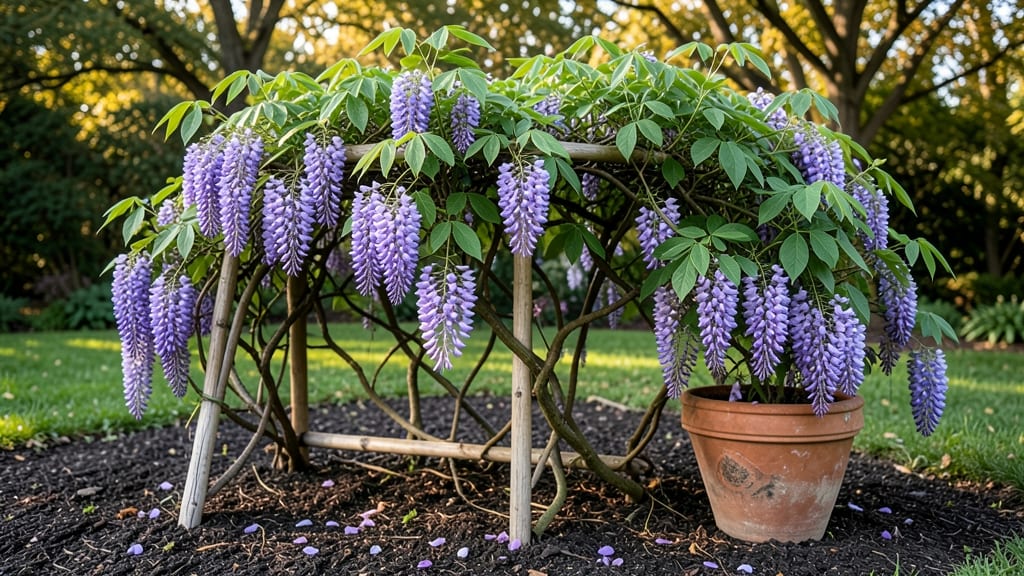
Your wisteria blooms at precise times each year—but if you’ve ever waited months for those fragrant 🌸 cascades only to be met with silence, you’re not alone.
The secret to predicting your variety’s exact bloom window isn’t just luck—it’s all about matching its USDA zone, sunlight habits, and even last year’s pruning choices.
From late April in Zone 6a to early June in warmer climates, each wisteria type (Chinese, Japanese, or American) follows its own schedule—and knowing yours means never missing another show.
Here’s how to pinpoint your variety’s bloom months, adjust care to encourage flowers, and troubleshoot when things go wrong.
Wisteria bloom time by variety and USDA Zone: exact months revealed
Predicting your wisteria’s bloom time isn’t guesswork—it’s science! The three main varieties (Chinese, Japanese, and American) each have distinct bloom windows that shift based on your USDA zone.
Whether you’re in Zone 5’s cold snaps or Zone 9’s mild winters, knowing these exact months will help you plan pruning, fertilizing, and even celebrate when those fragrant cascades appear. Let’s dive into the bloom calendars for each variety.
First, a critical note: winter chilling hours (below 45°F) trigger bud formation. Most wisterias need 500-1,000 hours—so if you’re in Zone 9 or warmer, you may need to provide artificial chilling or choose low-chill varieties like 'Amethyst Falls'.
Without enough chill, buds simply won’t open, leaving you staring at bare vines in spring.
Notice how Zone 5 gardeners might see blooms 2-3 weeks later than those in Zone 9? That’s because colder zones need more time to warm up after winter.
For example, my 'Amethyst Falls' in Zone 7 blooms by early May, while a friend’s identical plant in Zone 5 waits until mid-May. Regional microclimates also play a role—southern exposures or urban heat islands can push blooms 1-2 weeks earlier.
Here’s a pro tip: Track your local last frost date and add 2-4 weeks to estimate bloom time. Wisterias typically bloom 4-6 weeks after the last frost, but this varies by variety.
For instance, 'Blue Moon' American wisteria in Zone 6 often blooms by late May, while 'Prolific' Chinese wisteria in Zone 8 might start as early as mid-April. Use this timeline to time your spring pruning—cutting too early removes next year’s flower buds!
If you’re in Zone 9 or warmer, you might struggle with late or no blooms because many varieties need 500+ chilling hours. In these zones, opt for low-chill varieties like 'Amethyst Falls' or consider artificial chilling by storing cuttings in a refrigerator for 6-8 weeks before planting.
I’ve seen gardeners in Southern California use this trick to coax blooms from '
How to accelerate wisteria blooms: pruning, sunlight, and soil secrets
Wisteria blooms are legendary for their cascading clusters, but achieving that abundant flowering requires strategic care. The key to accelerating bloom time lies in mastering three critical factors: pruning techniques, sunlight exposure, and soil optimization.
These elements work together to trigger your wisteria’s natural flowering cycle, which typically occurs in late spring for most varieties.
First, let’s tackle the pruning paradox. Many gardeners mistakenly prune too late or too aggressively, which delays blooms. Wisteria flowers form on old wood, so pruning at the wrong time can remove next year’s blossoms.
The secret is timing—prune after flowering to shape the vine while preserving next season’s buds.
🌱 3 Science-Backed Ways to Speed Up Wisteria Blooms
- Prune after flowering (late spring/summer) to encourage new growth and next year’s buds.
- Ensure 6+ hours of direct sunlight daily—partial shade delays blooms by 2-4 weeks.
- Adjust soil pH to 6.0-7.0 and add phosphorus-rich fertilizer (10-10-10) in early spring.
Sunlight is non-negotiable for wisteria bloom acceleration. While some varieties tolerate partial shade, full sun exposure (6+ hours daily) triggers the hormonal signals that prompt flowering. In USDA zones 5-7, south-facing walls or trellises maximize sunlight, while zones 8-9 may need afternoon shade to prevent leaf scorch.
Soil health is equally critical. Wisteria thrives in well-draining, slightly acidic soil with a pH of 6.0-7.0. Conduct a soil test in early spring—if pH is too high (above 7.5), amend with elemental sulfur to lower it.
Add compost or aged manure to improve fertility, focusing on phosphorus (the "P" in NPK) to fuel flower production.
For established wisterias, a late-winter pruning (just before buds swell) removes dead or crossing branches while preserving flowering wood. Use clean, sharp pruners to make cuts at a 45-degree angle just above a bud node.
Avoid heavy pruning in fall, as this can stress the plant before winter dormancy.
Finally, watering habits play a subtle but vital role. Deep watering once weekly (or bi-weekly in established plants) encourages root development, which supports vigorous blooming. Mulch around the base with wood chips to retain moisture and regulate soil temperature—both critical for bud formation.
With these three pillars—pruning, sunlight, and soil—you’ll transform your wisteria from a late bloomer to a showstopper in just one season. Start with a soil test this spring, adjust your pruning schedule, and watch those fragrant clusters appear weeks earlier than ever before! 🌸