
Blooming
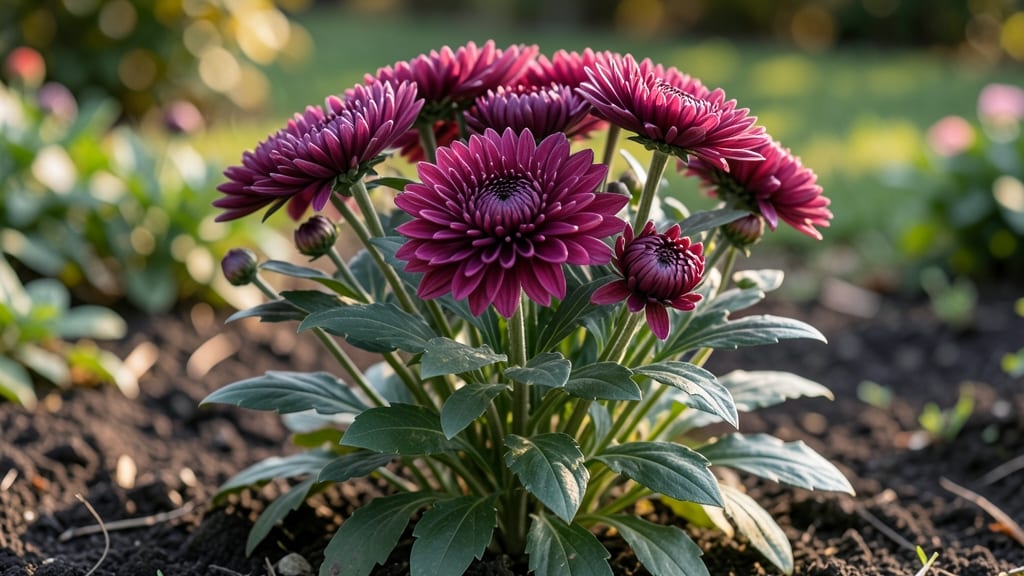
Mums (chrysanthemums) will bloom twice in one season when you deadhead spent blooms, ensure they get 6+ hours of sunlight daily, and prune back by half after their first flush. Using a balanced, low-nitrogen fertilizer also helps trigger that second round of flowers.
These hardy perennials are photoperiod-sensitive, meaning their blooming cycle responds directly to daylight changes. 🌞 When you prune them back after the first bloom—typically in early summer—you're essentially giving them a fresh start, encouraging new growth that can develop into a second set of buds.
The key is timing: prune too early, and you might miss the first bloom entirely; too late, and you risk weak stems that won't support the second round.
I've found that pairing this with consistent watering (about 1 inch per week) and avoiding high-nitrogen fertilizers keeps the plant focused on flowering rather than leafy growth.
What's interesting is how temperature plays a role too. Mums thrive in cooler weather, so if your summer stays too hot, they might go dormant or struggle to rebloom.
That's why many gardeners in warm climates opt for fall-planted mums—they naturally sync with cooler autumn temperatures for a more reliable second bloom. The same care principles apply whether you're working with garden mums or potted varieties.
💡 In This Article
- How Light and Pruning Influence Mum Reblooming
- Step-by-Step Guide to Encouraging Second Mum Blooms
How light and pruning influence mum reblooming
Mums are photoperiod-sensitive, meaning their blooming cycles are triggered by daylight length rather than temperature alone. When days shorten in late summer, these plants naturally produce a hormone called florigen that signals flower bud formation.
However, the first flush of blooms often occurs in early summer when days are still long.
Pruning back by one-third to one-half after the first bloom removes spent flowers and stimulates new growth from lower buds, which can then respond to the shortening daylight in late summer for a second bloom.
Think of it like giving your mum a haircut—it's not about removing beauty, but redirecting energy to fresh growth.
The 6+ hours of sunlight requirement isn't just about photosynthesis—it's about maintaining the plant's energy reserves. Mums need full sun (6-8 hours daily) to develop strong stems capable of supporting heavy blooms.
In my experience, mums grown in partial shade often produce fewer flowers and weaker stems that flop under the weight of blooms.
The ideal scenario is morning sun with afternoon shade in hot climates, as afternoon heat can stress the plants. 🌿 What's fascinating is how the plant's internal clock (circadian rhythm) coordinates with these light cues to time blooming—like a biological countdown to shorter days.
Temperature plays a subtle but crucial role in this process. Mums prefer cool nights (50-65°F) and moderate days (65-75°F) for optimal blooming. When temperatures climb above 85°F for extended periods, the plants may go dormant or produce fewer blooms.
This is why gardeners in warm climates often see better reblooming with fall-planted mums—the cooler autumn temperatures align perfectly with the plant's natural flowering triggers. The same principle applies to container-grown mums: moving them to a partially shaded spot during heatwaves can preserve their energy for that second bloom.
Pruning works through a process called apical dominance reversal. When you cut back the main stems, you remove the terminal buds that produce growth hormones (auxins) that suppress side bud development. This allows dormant buds lower on the stem to wake up and form new shoots.
The best time to prune is after the first bloom cycle, when you can see new growth emerging from the base.
Use clean, sharp pruners to make cuts just above a leaf node or set of leaves—this ensures the plant can quickly seal the wound and redirect energy to new growth. 🌱 What most gardeners overlook is that pruning too late in the season (after mid-August) can delay or prevent the second bloom, as the plant may not have enough time to recover and respond to shortening daylight.
Here's a visual way to think about it: Imagine your mum as a tree with multiple branches. The first flush of blooms is like fruit on the main branches.
When you prune back those branches, you're encouraging new branches to grow from the trunk (base of the plant), which can then bear fruit (flowers) in the next cycle.
The key measurements to remember are 3-4 inches above a leaf node when pruning, and maintaining 6+ hours of sunlight daily throughout the growing season. This balance between light exposure and strategic pruning creates the perfect conditions for that second bloom.
One common mistake is using high-nitrogen fertilizers, which promote leafy growth at the expense of flowers. Instead, opt for a balanced fertilizer (10-10-10 or 5-10-10 ratio) with slightly more phosphorus to encourage blooming.
The phosphorus helps strengthen the root system, which is crucial for supporting the energy demands of two bloom cycles. 🌸 What's interesting is how the plant's nutrient allocation shifts—when you prune, the plant redirects stored nutrients from leaves to new growth points, creating a feedback loop that enhances reblooming potential.