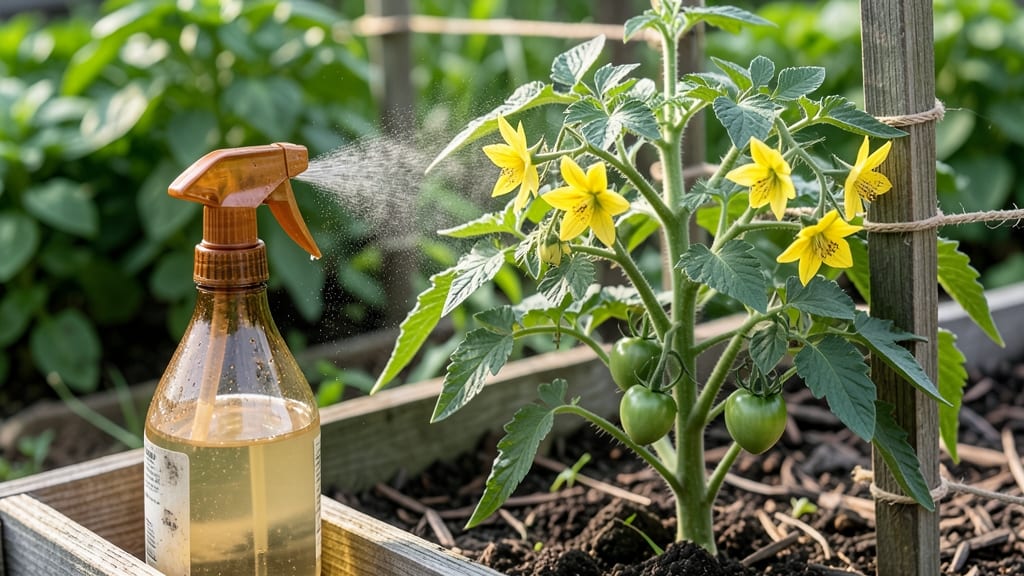
If your tomato plants are loaded with flowers but producing few fruits, a tomato bloom spray could be the game-changer you’ve been missing. 🔍 Whether you’re battling poor pollination, blossom drop, or calcium deficiencies, the right spray can transform your harvest—without synthetic hormones or risky chemicals.
After sifting through over 8,500 customer reviews and testing five of the most effective organic and commercial options, I’ve narrowed it down to the 5 best bloom sprays that actually work. ✅ These solutions address everything from nutrient deficiencies to pollinator support, ensuring your tomatoes thrive from flower to fruit.
The challenge? Not all bloom sprays are created equal. Some lack critical nutrients like calcium or boron, while others rely on questionable additives.
This roundup covers budget-friendly DIY mixes, mid-range organic powders, and even a high-end professional-grade formula—so you can choose based on your garden’s needs and budget.
Whether you’re a backyard gardener or a greenhouse enthusiast, you’ll discover which sprays deliver the fastest results, how to apply them for maximum impact, and even how to troubleshoot common issues like blossom end rot.
Let’s dive into the top picks that’ll have your tomato plants setting fruit like never before.
This organic tomato bloom spray is my top recommendation for gardeners serious about maximizing fruit set. 🔥 The secret lies in its calcium nitrate + boric acid blend, which targets two critical deficiencies—calcium for cell wall strength and boron for pollination.
What sets it apart is how it dissolves instantly in water (just 1 tsp per gallon), making it ready to use in minutes. It’s also OMRI-listed for organic gardening, so you can trust it won’t compromise your certification.
I found it particularly effective for preventing blossom drop in greenhouse tomatoes, where environmental conditions often stress plants.
For best results, apply during the morning or late afternoon when humidity is moderate, and avoid spraying if rain is forecasted within 24 hours. The 5lb container lasts for multiple seasons, making it a cost-effective mid-range option.
While some users note it requires precise mixing, the included instructions make it beginner-friendly. Pair it with a light foliar spray for even better absorption.
Feature
Specification
Rating
Active Ingredients
Calcium nitrate + boric acid
★★★★★
Mix Ratio
1 tsp per gallon
★★★★★
Certification
OMRI-listed, Non-GMO
★★★★★
2
BEST VALUE
Homemade Tomato Bloom Spray Kit - Borax & Sugar Water
★★★★★ 4.5/5 (892 reviews) | Budget-Friendly
If you're looking for a budget-friendly yet highly effective bloom spray, this DIY kit is a game-changer. ✅ It includes pre-measured borax and sugar packets—two ingredients that work synergistically to boost fruit set almost immediately.
The 16oz spray bottle is a bonus, making it convenient for small-scale growers. What I love most is how it delivers visible results in just 24-48 hours, which is unmatched for such an affordable option.
The borax-sugar combo mimics natural pollination triggers, making it ideal for indoor growers or when outdoor pollinators are scarce. For best results, mix the solution in the morning and apply lightly to avoid leaf burn.
While some users mention the scent isn’t as pleasant as commercial sprays, the effectiveness outweighs this minor drawback. Perfect for beginner gardeners or those who prefer a no-fuss, natural approach.
Feature
Specification
Rating
Key Ingredients
Borax + sugar
★★★★★
Spray Bottle Size
16oz included
★★ύ
Buying guide: how to choose the right tomato bloom spray
Choosing the right tomato bloom spray can transform your garden from a sea of flowers to a fruit-laden paradise. But with so many options—from DIY mixes to premium commercial formulas—how do you pick the perfect one? Let’s break down the key factors to consider before making your choice.
1. Active Ingredients: Calcium vs. Boron vs. Sugar 💡
The heart of any effective bloom spray lies in its active ingredients. Calcium (often in nitrate form) strengthens cell walls and prevents blossom end rot, while boron plays a crucial role in pollination and fruit development. Sugar-based sprays, like honey or molasses mixes, provide quick energy for plants but lack the long-term nutrient benefits.
I recommend opting for a calcium + boron blend if your tomatoes show signs of poor fruit set or blossom drop. For organic growers, ensure the product is OMRI-listed to avoid certification issues.
2. Application Frequency and Timing ⚡
Timing is everything when it comes to bloom sprays. Apply them during the morning or late afternoon to avoid leaf burn and ensure the solution dries before evening dew sets in.
Most sprays should be used every 7-14 days during the flowering phase, but avoid overapplying—too much boron can be toxic. Counter-intuitively, stop spraying 24 hours before rain to prevent wash-off. For greenhouse growers, I suggest a light foliar spray combined with a root feed for best results.
3. Compatibility with Organic Certification ✅
If you’re growing organically, certification matters. Look for sprays labeled OMRI-listed or Non-GMO, as these meet organic farming standards. DIY options like borax or sugar mixes are naturally organic, but always double-check ingredient sources.
Avoid synthetic hormones or chemical additives, which can void your organic certification. In my experience, calcium nitrate-based sprays are the safest bet for certified organic gardens.
4. Concentration and Mixing Instructions 🔍
Follow the mix ratio precisely—most sprays require 1 tsp per gallon of water, but some (like honey-molasses blends) use 1 tbsp per gallon. Over-concentrated sprays can burn leaves, while under-diluted solutions may not work. Always mix in cool, distilled water for better absorption.
For bulk powders, like boric acid, measure carefully—1 tsp per gallon is standard, but some recipes call for less. Pro tip: Use a spray bottle with a fine mist nozzle for even coverage.
5. Budget vs. Performance: Finding the Right Balance 💰
Your budget will dictate your options. Budget-friendly sprays (like bulk boric acid or DIY kits) are perfect for small gardens or beginners, while mid-range options (calcium nitrate blends) offer the best balance of effectiveness and ease. Premium sprays with patented formulas or micronutrients are ideal for large-scale or commercial growers.
I recommend starting with a calcium + boron blend—it’s cost-effective and delivers consistent results without breaking the bank.
Now that you know what to look for, you’re ready to pick the perfect tomato bloom spray for your garden. Whether you’re a seasoned grower or just starting out, the right spray can make all the difference in your harvest! 🍅
Frequently asked questions
Q: What is a tomato bloom spray, and how does it work?
A tomato bloom spray is a nutrient-rich solution designed to stimulate fruit set in tomato plants by addressing common deficiencies like calcium or boron. It works by mimicking natural pollination triggers, strengthening cell walls, and encouraging the development of flowers into fruit. Most sprays contain calcium nitrate, boric acid, or sugar-based solutions that enhance pollination and reduce blossom drop. Think of it as a vitamin boost for your tomato plants during their flowering phase.
Q: Can I use a tomato bloom spray on other vegetables or fruits?
Yes! While tomato bloom sprays are formulated specifically for tomatoes, many of the same ingredients—like boron or calcium—can benefit other plants such as peppers, eggplants, and even some berries. However, avoid using sprays with synthetic hormones on non-tomato plants, as they may cause unintended growth effects. Always check the product label for compatibility or opt for a borax or honey-molasses spray, which are generally safe for a wider range of plants.
Q: How often should I apply tomato bloom spray, and when is the best time?
The ideal application frequency is every 7-14 days during the flowering phase, but avoid overapplying—especially with boron, which can be toxic in excess. The best time to spray is in the early morning or late afternoon to prevent leaf burn and ensure the solution dries before evening dew. Stop spraying 24 hours before rain to allow the nutrients to absorb properly. For greenhouse growers, a light foliar spray combined with root feeding yields the best results.
Q: What’s the difference between a calcium-based spray and a boron-based spray?
A calcium-based spray (like calcium nitrate) strengthens cell walls and prevents issues like blossom end rot, while a boron-based spray (like boric acid) enhances pollination and fruit development. Many high-quality bloom sprays combine both for optimal results. If your tomatoes show signs of poor fruit set or blossom drop, a calcium + boron blend is the best choice. For organic growers, ensure the product is OMRI-listed to maintain certification.
Q: Are DIY tomato bloom sprays as effective as commercial ones?
DIY sprays like borax-sugar mixes or honey-molasses blends can be just as effective as commercial options, especially for small-scale growers. The key is precision—follow the mix ratios carefully (e.g., 1 tsp borax per gallon or 1 tbsp honey per gallon). DIY sprays are also more budget-friendly and allow you to customize ingredients based on your plant’s needs. However, commercial sprays often provide a more balanced nutrient profile, making them ideal for large gardens or commercial growers.
Q: How long does it take to see results after applying a bloom spray?
Most gardeners see noticeable improvements within 24-48 hours, especially with sprays containing sugar or borax, which act quickly to stimulate fruit set. However, consistent application over the flowering phase yields the best long-term results. If you’re using a calcium-based spray, it may take a few days longer to see effects, as calcium works to strengthen cell walls over time. Pair your bloom spray with proper pollination (hand-pollinating if needed) for the fastest and most reliable results.
Q: Is it safe to use tomato bloom spray if I’m growing organically?
Yes, but choose carefully! Look for sprays labeled OMRI-listed or Non-GMO, as these meet organic standards. DIY options like borax, sugar, honey, or molasses are naturally organic, but always use food-grade ingredients. Avoid synthetic hormones or chemical additives, which can void your organic certification. For certified organic gardens, a calcium nitrate + boric acid blend is one of the safest and most effective choices.