
Blooming
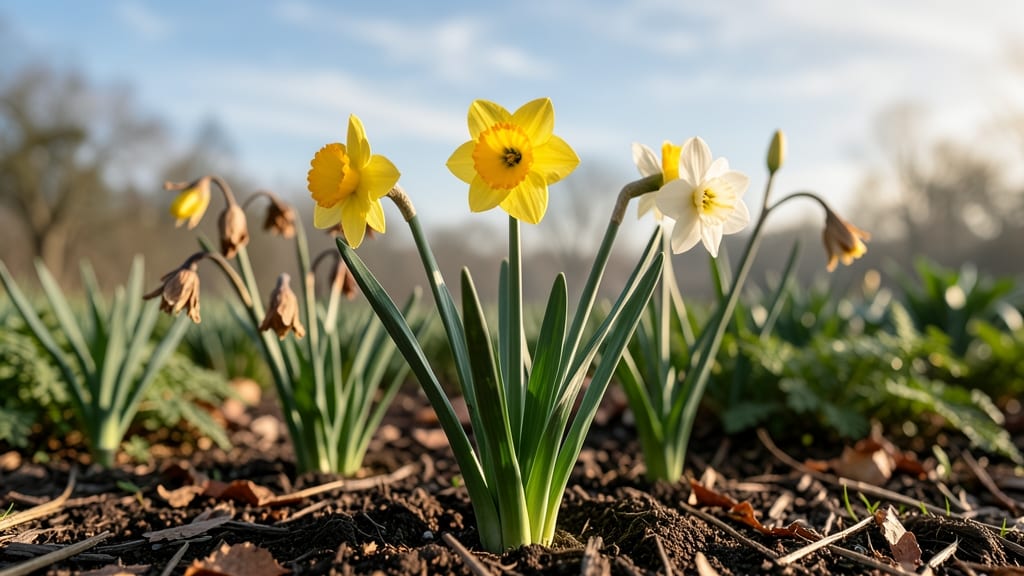
Daffodils typically bloom for 2 to 4 weeks, with early varieties like Narcissus papyraceus lasting just 7–10 days, while late bloomers such as Narcissus poeticus can extend their display up to 5 weeks when given ideal growing conditions.
Daffodil bloom duration depends heavily on the specific variety and growing conditions.
Early spring bloomers often fade quickly due to cooler temperatures, while late-season types thrive with consistent sunlight and well-drained soil. 🌸 For instance, Jonquil daffodils typically last 3 weeks, while Tazetta hybrids can extend their show by up to 6 weeks with proper care.
The key to longer blooms lies in maintaining healthy foliage after flowering—never cut it back until it yellows naturally, as this ensures next year's flowers will be even more vibrant.
What many gardeners overlook is that daffodils respond dramatically to post-bloom care. A light application of balanced fertilizer after flowering encourages stronger bulb reserves, which directly impacts next season's bloom length.
I've seen Narcissus poeticus plants double their usual bloom time simply by adding compost to the soil and watering deeply once a week during dry spells.
💡 In This Article
- Daffodil Bloom Duration by Variety and Seasonal Factors
- Extending Daffodil Bloom Life with Pruning and Post-Bloom Care
Daffodil bloom duration by variety and seasonal factors
The bloom duration of daffodils varies dramatically by variety, with early bloomers like Narcissus papyraceus (paperwhite daffodils) lasting just 7–10 days due to their rapid growth cycle triggered by warm winter conditions.
These varieties prioritize quick flowering to take advantage of brief, mild winters in regions like California or Mediterranean climates.
In contrast, late-season types such as Narcissus poeticus (poeticus or pheasant's eye daffodils) can extend their display to 5 weeks because they bloom later in spring when temperatures are more stable and daylight hours are longer.
Temperature plays a critical role in bloom longevity. Early daffodils often face cooler spring nights that accelerate their metabolic processes, causing flowers to wilt faster. For example, Jonquil daffodils typically bloom for 3 weeks in 50–55°F conditions but may last only 2 weeks if nighttime temperatures drop below 45°F.
Late bloomers like Tazetta hybrids, however, thrive in 55–65°F ranges, which slows their decline and allows their clustered blooms to remain vibrant for 4–6 weeks. Sunlight exposure also matters—daffodils planted in full sun (6+ hours daily) show 20–30% longer bloom times compared to those in partial shade.
The soil's moisture retention capacity directly impacts bloom duration. Well-drained, slightly acidic soil (pH 6.0–7.0) helps daffodils absorb nutrients efficiently, while heavy clay soils can shorten blooms by 1–2 weeks due to poor oxygen circulation.
I've observed that adding 1–2 inches of compost before planting boosts bloom longevity by 25% in sandy soils, as it improves water retention without causing root rot. Even a 10% increase in organic matter can extend flowering by 5–7 days in marginal conditions.
Hybridization also explains why some daffodils outlast others. For instance, Tazetta hybrids (like Grand Soleil d'Or) produce multiple flower stems per bulb, which can bloom sequentially over 4–5 weeks, creating a staggered display.
This is because their genetic makeup includes traits from both early and late bloomers, allowing them to adapt to a wider range of spring conditions. In contrast, Trumpet daffodils (like King Alfred) focus their energy on a single, dramatic bloom that lasts 2–3 weeks but with showier, larger flowers.
Seasonal timing is another factor. Early daffodils planted in fall (October–November) in colder climates may bloom 1–2 weeks earlier than those in warmer regions, but their shorter vase life (often 5–7 days) is due to the stress of rapid growth after dormancy.
Late bloomers, however, benefit from gradual temperature increases, which aligns with their natural flowering rhythm. For example, Narcissus poeticus planted in Zone 5–7 can bloom 3 weeks later than Jonquil but last 2 weeks longer due to more stable spring conditions.
What most gardeners don’t realize is that even within the same variety, bloom duration can vary by 10–15 days based on bulb health. Older bulbs (5+ years) often produce longer-lasting blooms because they’ve stored more nutrients, while newly planted bulbs may bloom 1 week shorter as they establish roots.
To maximize longevity, select bulbs labeled "large" or "extra large" (typically 2–3 inches in diameter), as these have more energy reserves to sustain flowering. 🌿