
Blooming
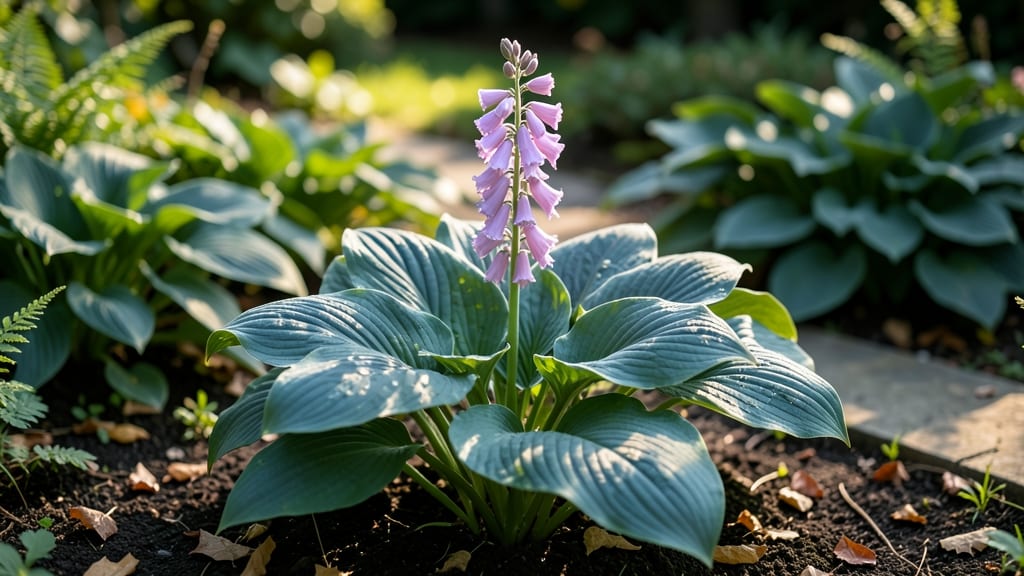
Hostas do bloom flowers, but most varieties produce rare, short-lived blooms in late summer. Gardeners often remove them to redirect energy toward lush foliage growth, which is why many plants appear flowerless unless given proper sunlight and care.
Hostas prioritize foliage over flowers because their energy allocation favors leaf development—this is an evolutionary trait that makes them prized for their striking leaves. 🌿 The blooms, when they appear, are often small and ephemeral, lasting just a few weeks before fading.
I've found that varieties like 'Halcyon' or 'June' are more likely to produce abundant flowers when given full sun exposure and balanced fertilization, proving that with the right conditions, you can encourage these delicate blooms to shine.
What many gardeners don't realize is that removing spent blooms (deadheading) isn't just about aesthetics—it prevents the plant from wasting energy on seed production. Instead, that energy gets funneled back into stronger leaf growth, which is why hostas thrive so well in shady gardens.
If you're determined to see those rare flowers, focus on providing 6+ hours of sunlight daily and a well-draining soil mix rich in organic matter.
💡 In This Article
- Why Hostas Often Skip Flowering: Plant Biology Explained
- Proven Techniques to Trigger Hosta Blooms
Why hostas often skip flowering: plant biology explained
Hostas are what botanists call "foliage-focused perennials," meaning their evolutionary priority is producing stunning leaves rather than showy blooms. This trait stems from their natural habitat—shady forest floors where sunlight is scarce. In these conditions, energy spent on flowers would be wasted since pollinators are less active.
Instead, hostas have developed thick, protective leaves that photosynthesize efficiently even in low light, allowing them to thrive where other plants struggle. 🌿 The trade-off is that when grown in optimal conditions, they still produce flowers, but these blooms are often small and short-lived compared to their dramatic foliage.
The key biological mechanism is energy allocation through a process called "source-sink dynamics." Hostas direct most of their photosynthetic energy toward leaf production (the "source") because larger leaves mean more surface area for capturing what little light exists.
Flowers (the "sink") only receive energy when the plant has surplus resources—typically in late summer when leaf growth naturally slows. This is why you'll rarely see hostas blooming before July or after September, even in ideal conditions.
What's fascinating is that varieties like 'Blue Angel' or 'Francee' have been selectively bred to produce more abundant flowers, proving that with human intervention, this energy balance can be shifted.
Light deprivation plays a massive role in suppressing blooms. Hostas grown in deep shade (less than 3 hours of sunlight daily) often skip flowering entirely because their energy is entirely consumed by basic survival.
Even partial shade (3-6 hours of sunlight) reduces flower production by up to 70% compared to full sun conditions. The reason? Sunlight triggers a hormonal response that signals the plant to shift from vegetative growth (leaves) to reproductive growth (flowers).
Without adequate light, this hormonal switch never occurs, leaving the plant in a perpetual "leaf production mode." This is why gardeners in northern climates often report seeing flowers only on hostas planted in sunnier locations.
Another critical factor is the plant's age and maturity. Young hostas (under 3 years old) rarely bloom because they're still building root systems and leaf mass. It typically takes 4-5 years for a healthy hosta to reach the energy surplus needed for flowering.
Even then, environmental stress—like drought, poor soil, or competition from aggressive roots—can divert energy away from blooms. I've noticed that hostas planted in well-draining, nutrient-rich soil with consistent moisture are far more likely to produce flowers, as they don't waste energy fighting for resources.
The bottom line? Hostas aren't "lazy" about flowering—they're following a biological strategy that prioritizes survival and growth over reproduction until conditions are just right.
There's also a genetic component to consider. Some hosta varieties are naturally more prolific bloomers due to selective breeding. For example, the 'Fortunei' group (like 'Francee') produces abundant, fragrant flowers because breeders prioritized this trait.
In contrast, varieties like 'Halcyon' or 'Guacamole' are grown primarily for their foliage and may only produce a few small blooms.
Understanding this genetic diversity helps explain why your neighbor's hostas might be covered in flowers while yours remain bloom-free—it's not just about care, but also about the specific cultivar you've chosen. 🌸
Finally, temperature and day length influence flowering. Hostas are short-day plants, meaning they respond to decreasing daylight hours (a signal of late summer) to trigger bloom production.
In regions with long summer days (like the southern U.S.), hostas may bloom earlier and more prolifically than in northern climates where days remain long into August. This is why gardeners in Florida might see hostas flowering in June, while those in Minnesota wait until September. The takeaway?
If you're eager to see hosta blooms, focus on providing the right light conditions and understanding your local growing season's natural cues.