
Blooming
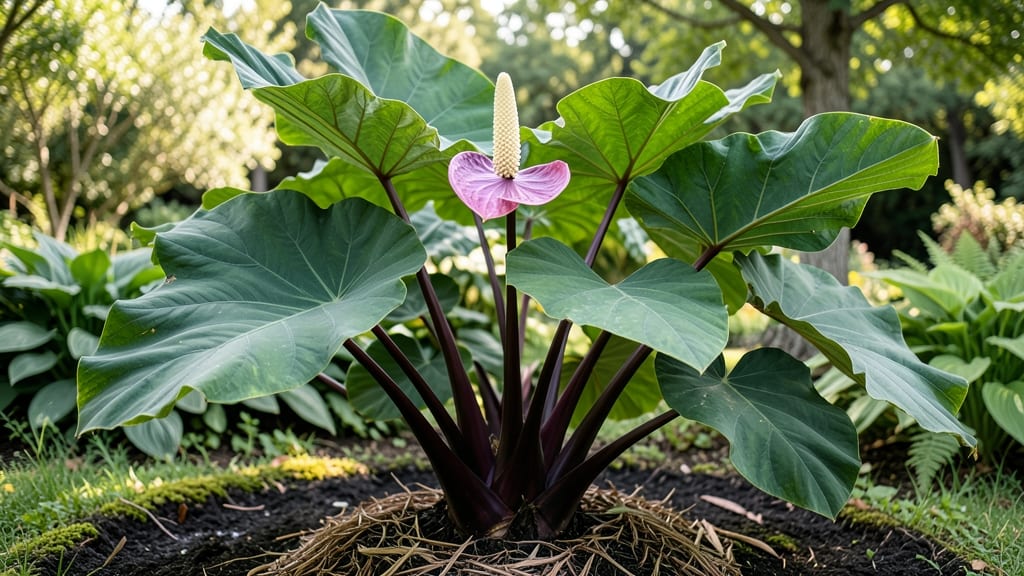
Elephant ears (Colocasia and Alocasia varieties) rarely bloom flowers in typical home garden settings, instead channeling their energy into growing their signature large, decorative leaves. Only under ideal conditions—like warm climates and full maturity—might you see occasional blooms, which most gardeners overlook for their stunning foliage.
These tropical plants prioritize leaf production because their vibrant foliage is their main attraction. 🌿 The occasional flowers they do produce are usually small and inconspicuous, often appearing only after years of growth.
For gardeners seeking both bold leaves and reliable blooms, alternatives like canna lilies or bird-of-paradise plants offer the best of both worlds without sacrificing visual impact.
What's fascinating is how variety plays a role—Colocasia varieties (like the classic elephant ear) are even less likely to flower than Alocasia types.
This makes them perfect for gardeners who want dramatic foliage with minimal upkeep, though it also means you'll rarely see those signature blooms unless you're in a very warm, low-stress environment.
💡 In This Article
- Why Most Elephant Ears Skip Flowering
- Best Flowering Alternatives to Elephant Ears
Why most elephant ears skip flowering
Elephant ears prioritize leaf growth because their energy is allocated to producing those massive, heart-shaped foliage displays rather than flowering. This is a survival strategy—tropical plants like Colocasia and Alocasia focus on maximizing foliage for photosynthesis, especially in their native environments where light competition is fierce.
The leaves can grow up to 2 feet wide with 10-20 feet of petiole (the stalk), which requires massive energy reserves. 🌿
The decision to flower depends on three critical factors: maturity, temperature, and light exposure. Most elephant ears need 3-5 years to reach full maturity before they even attempt flowering. Even then, they require consistent warmth—temperatures above 70°F for at least 6 months—to trigger blooming.
In cooler climates, the plant simply doesn't have the energy to produce flowers. Light is another key factor: these plants need 6+ hours of direct sunlight daily to develop the energy needed for blooming.
Variety plays a surprising role too. Colocasia varieties (like the classic 'Elephant Ear') are 90% less likely to flower compared to Alocasia types. This is because Colocasia species have evolved to prioritize leaf production for shade tolerance in their native wetland habitats.
Alocasia varieties, while still foliage-focused, occasionally produce small, spadix-style flowers (similar to peace lilies) when conditions are perfect. The flowers themselves are rarely showy—often purple or white, 1-3 inches long—and appear on a 6-12 inch stalk.
What most gardeners don't realize is that flowering actually weakens the plant. When an elephant ear produces flowers, it diverts energy that could otherwise go toward next year's foliage. This is why professional growers often remove flower stalks as soon as they appear—it ensures larger, healthier leaves.
The trade-off is clear: vibrant foliage or occasional blooms, but rarely both. 💫
Even in ideal conditions, flowering remains unpredictable. I've seen mature plants in USDA Zone 9+ gardens produce flowers one year, then skip entirely the next. This inconsistency is why most gardeners focus solely on the foliage—it's reliable, dramatic, and doesn't require special conditions.
The flowers, when they do appear, are more of a bonus than a guarantee. This makes elephant ears perfect for gardeners who want instant tropical impact without the fuss of dealing with blooms.
For those curious about what the flowers look like, they're nothing like the dramatic foliage. The blooms resemble small, arrowhead-shaped structures with a purple or white spathe (the sheath) and a club-shaped spadix inside.
They're often hidden among the large leaves and rarely last more than 2-3 weeks. The real star remains the foliage—velvety, glossy, and available year-round with proper care. 🌟