
Blooming
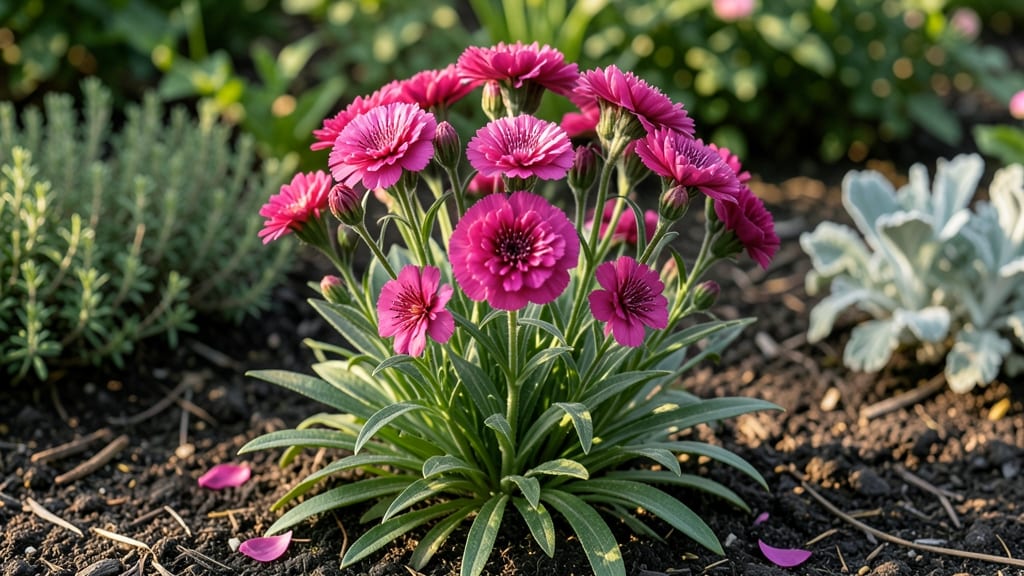
Dianthus don't bloom continuously all summer, but with regular deadheading and strategic pruning, they deliver vibrant flowers from late spring through early fall—often surprising you with a second flush of blooms when temperatures dip in cooler weather. Perennial varieties like 'Firewitch' or 'Matrona' typically outlast annuals.
Dianthus are seasonal powerhouses rather than nonstop bloomers, and their flowering patterns depend on whether you're growing annuals or perennials. 🌸 Annual varieties often peak in early summer and fade as temperatures rise, while perennials may take a brief mid-summer rest before reblooming in late summer or fall.
The key to extending their season lies in removing spent flowers promptly—this encourages the plant to redirect energy toward new buds rather than seed production.
I've found that pairing deadheading with a light trim of leggy stems right after blooming helps maintain a bushier shape, which in turn supports more abundant flowering later in the season.
Climate plays a surprisingly big role too.
In cooler northern regions, dianthus often bloom more prolifically in spring and fall when temperatures are mild, while hot southern summers can cause annuals to bolt prematurely. 🌡️ That's why I recommend planting perennials in areas with moderate summers—they're far more forgiving and tend to reward you with longer flowering periods.
For annuals, choosing heat-tolerant varieties like 'Rainbow' or 'Sweet William' can help push their blooming season closer to full summer.
💡 In This Article
- Why Dianthus Flower Seasons Vary by Type and Climate
- Pruning and Care Tips to Extend Dianthus Blooms
Why dianthus flower seasons vary by type and climate
Dianthus flowering cycles are deeply tied to their biological classification—whether they're annuals or perennials—and this determines their seasonal behavior. Annual varieties like Sweet William or Rainbow typically bloom in a single, concentrated flush during spring to early summer, often tapering off as temperatures exceed 80°F.
This happens because their natural lifecycle is programmed to complete flowering and seed production within one growing season. In contrast, perennial dianthus like 'Firewitch' or 'Matrona' have more flexible timelines, often taking a brief mid-summer rest before reblooming in late summer or fall when temperatures moderate.
The science behind this involves photoperiodism—how plants respond to daylight length.
Most dianthus varieties are short-day plants, meaning they bloom more prolifically when daylight hours shorten in late summer and fall. 🌅 This explains why many gardeners notice a second wave of flowers in September or October, especially in regions with mild autumns.
In hotter climates, this second flush may be delayed or less vigorous, while cooler northern zones often experience more consistent fall blooming. The 10-12 hour daylight threshold appears to be a critical trigger for many perennial varieties to restart flowering.
Climate zones create dramatic differences in blooming patterns. In USDA Zone 5-6, where summers are warm but not extreme, perennial dianthus often bloom from May through September with minimal breaks.
However, in Zone 8-9, the intense summer heat can cause annuals to bolt prematurely, while perennials may go dormant until temperatures drop below 85°F in late summer. 🌡️ I've observed that even within the same species, plants in coastal areas with cooler maritime climates tend to have longer blooming seasons than those inland with hotter microclimates.
Another critical factor is vernalization—the process where plants need a period of cold to trigger flowering. Many perennial dianthus benefit from winter chilling, which resets their biological clocks for spring blooming. This is why they often perform better in regions with distinct seasonal temperature shifts.
Annual varieties, lacking this cold requirement, rely entirely on warm spring temperatures to initiate flowering, which is why their seasons are more compressed.
Soil temperature also plays a subtle but important role. Dianthus roots prefer cooler soil (60-65°F), and when summer heat causes soil temperatures to rise above 75°F, root activity slows, which can temporarily halt flowering.
This is why mulching with 2-3 inches of organic matter helps maintain optimal root zone temperatures and supports more consistent blooming throughout the season.
Understanding these factors helps explain why your neighbor's dianthus might look completely different from yours—it's not just about the variety, but the specific combination of climate, soil, and care practices.
For example, a 'Firewitch' dianthus in Zone 5 might bloom from May to October, while the same plant in Zone 9 could struggle to produce significant flowers until September. The key is matching your growing conditions to the plant's natural tendencies.