
Blooming
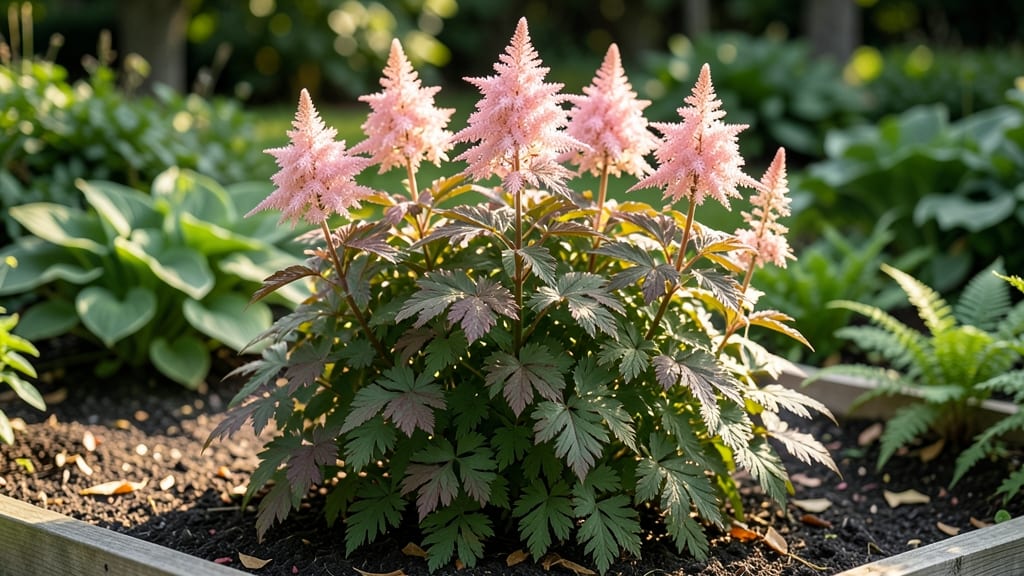
Astilbe blooms don't naturally last all summer, as they peak in late spring to early summer with occasional late-summer reblooming if you deadhead them regularly. Cooler temperatures and consistent care help prolong their flowering season.
Most astilbe varieties are seasonal bloomers, with their primary flower display lasting 4-6 weeks during spring's cooler months. 🌸 The key to extending their season lies in deadheading—removing spent blooms encourages new growth, though results vary by species.
For example, Astilbe chinensis often reblooms in late summer, while Astilbe japonica may produce smaller secondary blooms if conditions are ideal. Proper watering (keeping soil moist but not soggy) and partial shade also play critical roles in maintaining healthy plants.
What surprises many gardeners is how climate affects timing. In hotter zones, astilbes may bolt or decline earlier, while cooler northern regions often see longer blooming periods.
I've found that mulching with organic matter helps regulate soil temperature, giving plants a better chance to rebound after their initial flush of flowers.
💡 In This Article
- Astilbe Blooming Seasons by Variety
- Deadheading and Care for Longer Astilbe Blooms
Astilbe blooming seasons by variety
Astilbe blooming patterns vary dramatically by species, with Astilbe chinensis often leading the pack as the most reliable rebloomer. This variety typically produces its first flush of feathery plumes in late May to June, followed by a second, smaller bloom in August to September if conditions are right.
The secret lies in its native habitat—cooler, moist mountain regions where summer heat isn't overwhelming. In contrast, Astilbe japonica varieties usually bloom once in May to early June, with minimal reblooming potential unless given ideal care.
The difference comes down to genetics and growth cycles. Astilbe chinensis has a more flexible flowering mechanism, able to produce secondary blooms when days grow shorter and temperatures moderate. Think of it like a plant version of "back-to-school season"—the cooler weather signals it's time for another growth spurt.
Meanwhile, Astilbe simplicifolia (like 'Deutschland') tends to be a one-time bloomer, producing its showstopping plumes in late spring before focusing on foliage production. 🌿 The key factor here is photoperiod sensitivity—how plants respond to daylight length—which varies between species.
Climate zones play a massive role in extending or shortening bloom times. In USDA Zones 3-5, astilbes often enjoy longer seasons because cooler summers prevent heat stress. I've observed 'Fanal' astilbe in my Zone 5 garden reblooming in late August when nights drop below 70°F.
In hotter Zones 7-9, however, many varieties bolt after their initial bloom, with foliage turning crispy by July. The heat triggers an early dormancy response, similar to how some annuals "give up" when temperatures exceed 90°F for extended periods.
Color also influences bloom longevity. Darker plum varieties like 'Purple Haze' tend to have slightly shorter primary blooming periods because their pigments are more sensitive to UV exposure. Lighter pinks and whites (like 'Deutschland') often last longer because their pigments reflect more light, reducing heat absorption.
This is why you'll see white astilbes still looking fresh in late summer while purples may fade earlier—it's not just about care, but also about the plant's built-in sun protection mechanisms.
For gardeners in warmer climates, selecting Astilbe chinensis hybrids is your best bet for extended color. These varieties have been bred to handle slightly warmer conditions while maintaining reblooming potential. The trade-off? They often produce slightly smaller plumes than their once-blooming cousins.
In my experience, 'Amethyst' (a chinensis hybrid) will give you two rounds of blooms in a good year, while 'Bridal Veil' (a japonica) might only reward you once—but with showier, larger flowers.
One surprising fact: Some astilbe varieties actually store energy for potential reblooming. The plant's rhizomes act like little batteries, storing carbohydrates during the growing season. When you deadhead properly, you're essentially telling the plant, "Hey, you've got another chance—let's try again!"
This energy storage explains why well-established astilbes (3+ years old) often perform better than young plants when it comes to reblooming.