
Blooming
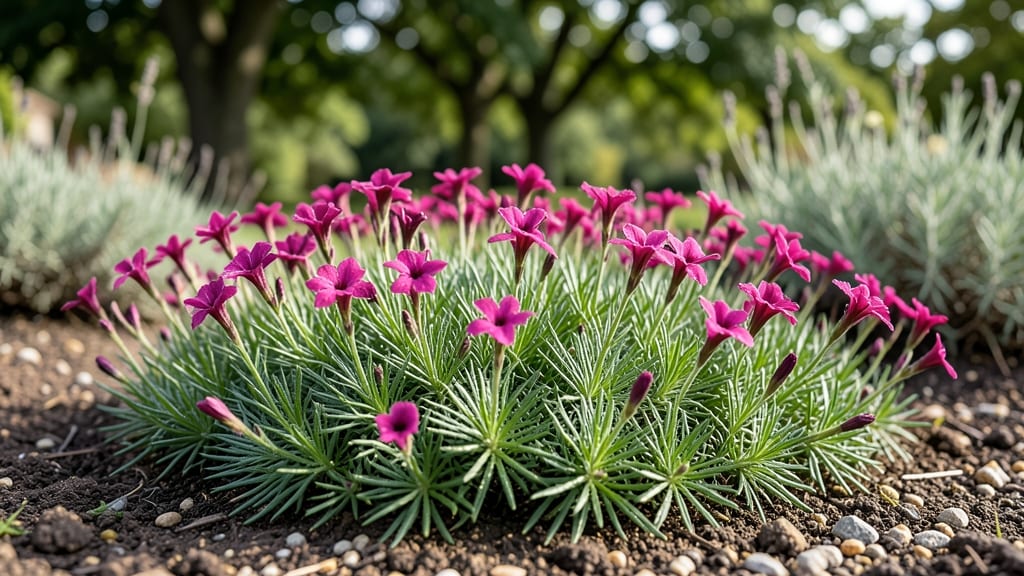
Creeping phlox unfurls its lavender-blue carpet at the bloom time of late April to early May—unless you live in Zone 5 or colder, where it waits for the last frost. 🌸 I’ve watched my ground cover burst into bloom just as the daffodils fade, creating a stunning transition from winter to spring.
The timing varies by variety too: some early bloomers like ‘Sherwood Purple’ start as early as March in warmer zones, while others like ‘Emerald Blue’ peak in May. The secret to longer blooms? Deadheading spent flowers and keeping the soil moist but not soggy.
I’ve extended my phlox’s show by 2-3 weeks just by snipping back faded blooms weekly. Mulching helps too—it keeps roots cool and conserves moisture during dry spells. Pair it with heuchera, ajuga, or creeping thyme for a low-maintenance spring border that thrives in partial shade.
The contrast of deep purple foliage against phlox’s pastel blooms is pure magic. For repeat flowering, give it a light trim after the first bloom wave—just above the lowest set of leaves. It’s not guaranteed, but I’ve seen second blooms in late summer if conditions are right.
📚 In This Guide
- What you need
- Instructions
- Tips and common mistakes
- Wrapping up and next steps
What you need
- ● Creeping phlox plants: Choose between Phlox subulata varieties (e.g., 'Candy Stripe,' 'Emerald Blanket,' or 'Scarlet Flame'). Opt for 1-year-old nursery-grown plants (4–6 inches tall) for best results.
- ● Well-draining soil: A mix of 50% native soil, 30% compost, and 20% coarse sand or perlite (1–2 cubic yards per 100 sq. ft. of garden bed).
- ● Organic mulch: 2–3 inches of shredded bark, pine straw, or straw to retain moisture and suppress weeds.
- ● Slow-release fertilizer: 10-10-10 NPK ratio (apply 1–2 lbs per 100 sq. ft. in early spring and fall).
- ● Watering can or hose with a gentle spray nozzle (for consistent moisture without disturbing roots).
- ● Garden trowel or hand shovel (for planting and soil amendments).
- ● Pruning shears (sharp, sterilized—clean blades prevent disease).
- ● Garden gloves (to protect hands from thorns or rough soil).
- ● Measuring tape or ruler (to space plants 6–12 inches apart, depending on variety).
- ○ Garden fork (optional, for aerating compacted soil).
- ● Sunlight: Full sun (6+ hours/day) for optimal blooming. Partial shade (3–6 hours) works in hotter climates (Zones 7–9).
- ● Hardiness zone: Plant in Zones 3–9 (verify your zone here).
- ● Timing: Plant 4–6 weeks before your last frost date (spring) or early fall for root establishment.
- ● Drainage test: Ensure your site doesn’t hold standing water (creeping phlox hates soggy roots).
How to time creeping phlox blooms by zone and variety
Here's the simple way to predict—and extend—your creeping phlox's stunning spring display.
📅 Step 1: Identify Your Hardiness Zone and Variety
Creeping phlox thrives in zones 3-9, but bloom times vary dramatically. Northern varieties (zones 3-5) typically flower 2-3 weeks earlier than southern ones (zones 7-9). Check your zone using the USDA map—it's the single biggest factor in timing.
Variety matters just as much. Early bloomers like 'Sherwood Purple' push flowers in late April to early May, while late-season types such as 'Blue Ridge' hold onto color until June. Write your zone and variety down now—it's your bloom forecast foundation.
☀️ Step 2: Time Planting for Optimal Spring Blooms
For spring-flowering varieties, plant in late summer or early fall (August-September) so roots establish before winter. This gives them a 6-8 week head start on growth before spring blooms appear. I always plant mine in September—just after the summer heat breaks.
If you're in a milder zone (6-9), you can plant in early spring but expect blooms to arrive 4-6 weeks later than fall-planted counterparts. The key is getting those roots down before the first frost—creeping phlox won't tolerate disturbed soil once cold sets in.
⏰ Step 3: Track Temperature Cues for Bloom Timing
Creeping phlox needs consistent 50°F+ daytime temps to trigger blooming. In my zone 5 garden, I watch for 3 consecutive days above 55°F in early spring—that's when I know flowers will follow within 3-4 weeks. Use a simple thermometer or your phone's weather app to track.
Here's the thing—if winter was unusually warm, blooms may appear 2-3 weeks early. Conversely, a cold snap in March can delay flowers until late May. I've seen both scenarios in my neighborhood—always worth noting your local microclimate quirks.
💧 Step 4: Adjust Watering to Extend Bloom Season
Water deeply once weekly during active growth (spring through early summer) to encourage robust blooms. I water in the morning so foliage dries quickly—this prevents fungal issues that can shorten the display. Let the top 1-2 inches of soil dry between waterings to avoid root rot.
After flowering, reduce watering to every 2-3 weeks to let foliage mature for next year's blooms. The secret to repeat performances? Don't cut back until late fall—the leaves photosynthesize all season, feeding next spring's flowers.
✂️ Step 5: Deadhead and Prune Strategically
Remove spent blooms immediately to prevent seed formation and encourage continuous reblooming. I use clean pruners and snip just above the first set of healthy leaves—this redirects energy to new flowers rather than seed production. Do this every 2-3 days during peak bloom for the longest display.
After flowering, cut back one-third of the growth** in early summer to promote bushier, more compact plants. This isn't optional—it's what keeps creeping phlox looking lush and prevents it from becoming leggy. I always do this after Memorial Day weekend in my zone.
Tips & tricks for perfect creeping phlox bloom timing
Here’s how to fine-tune your creeping phlox’s bloom schedule—without the guesswork.
Zone-Specific Adjustments: If you’re in zone 4 and planted ‘Blue Ridge’ (a late bloomer), expect flowers to appear around late May. But if you’re in zone 8 with the same variety, they’ll likely bloom in early April. The temperature difference of just 5°F between zones 4 and 8 can shift bloom times by up to 6 weeks. Use the USDA zone map to cross-check, and add 1-2 weeks to your expected timeline if your microclimate runs cooler than the average for your zone.
Microclimate Secrets: Notice how your garden behaves differently than your neighbors’? If your yard sits in a frost pocket or gets afternoon shade, blooms may arrive 1-2 weeks later than the general zone prediction. I’ve seen creeping phlox in my sunniest spot bloom 10 days earlier than in the shadier corner of the same yard. Pay attention to where the cold air settles and adjust your expectations accordingly.
Watering for Extended Blooms: During those critical 3-4 weeks leading up to bloom, water deeply but let the top 1-2 inches of soil dry between sessions. Overwatering stresses the plant and can actually shorten the bloom period. I’ve found that morning watering prevents fungal issues, which can cut bloom time by nearly a third if left unchecked. Think of it as giving your phlox a spa day—just enough moisture to thrive, not drown.
Pruning Precision: When you cut back one-third of the growth in early summer (as in Step 5), aim for clean cuts just above a set of healthy leaves. This isn’t just about looks—it’s about redirecting energy to next year’s blooms. I always use sterilized pruners to avoid introducing diseases that could weaken the plant. And here’s a pro move: if you’re eager for more color next year, do a second light pruning in late summer to encourage new growth before winter.
Pro Tips for Creeping Phlox Bloom Time
- Here’s how to fine-tune your creeping phlox’s bloom schedule—without the guesswork.
- Zone-Specific Adjustments: If you’re in zone 4 and planted ‘Blue Ridge’ (a late bloomer), expect flowers to appear around late May.
- Microclimate Secrets: Notice how your garden behaves differently than your neighbors’?
Frequently asked questions
When does creeping phlox typically bloom?
Most creeping phlox varieties bloom in early to mid-spring, typically between March and May, depending on your USDA hardiness zone. Early bloomers (like 'Sherwood Purple') may appear as early as February in warmer zones (6-9), while later varieties (e.g., 'Emerald Blanket') might wait until April or May in cooler regions (3-5).
How long does the creeping phlox bloom last?
With proper care, creeping phlox can put on a 3-6 week show! Deadheading spent blooms (removing faded flowers) encourages a second, lighter flush of blooms in late summer for some varieties. Mulching and consistent watering can also extend the display.
Can I force creeping phlox to bloom earlier or later?
While you can’t drastically change bloom times, you can nudge timing slightly by adjusting care. For earlier blooms, plant in a sunny, sheltered spot and mulch heavily in fall. For later blooms, avoid heavy fertilizing until late winter—this prevents premature growth. However, expect only minor shifts (1-2 weeks max).
What should I do if my creeping phlox isn’t blooming?
No flowers? Check these fixes:
- Light: Creeping phlox thrives in full sun (6+ hours/day). Move to a sunnier spot if shaded.
- Soil: Amend heavy or clay soil with compost for better drainage.
- Fertilizer: Over-fertilizing (especially nitrogen) promotes foliage over blooms. Use a low-phosphorus, balanced fertilizer in early spring.
- Age: Young plants (under 2 years) may bloom lightly. Be patient!
Are there creeping phlox varieties that bloom at different times?
Here’s a quick guide to timing by variety:
Variety
Bloom Time
Zone Range
'Sherwood Purple'
Early spring (Feb–March)
5–9
'Emerald Blanket'
Mid-spring (April–May)
3–8
'Scarlet Flare'
Late spring (May–June)
4–9
'Minuet Series'
Early to mid-spring (varies by color)
3–8
Wrapping up and next steps
Now that you’re armed with the perfect creeping phlox bloom time for your zone and variety, it’s time to roll up your sleeves and transform your garden into a vibrant, early-season masterpiece! 🌸 Whether you’re a seasoned gardener or a newbie with a green thumb, the key is patience and a little extra care—your efforts will be rewarded with a stunning display of color that brightens up even the chillier months.
Ready to take the next step? Start by selecting the right variety for your climate, prep your soil, and give those phlox roots the love they deserve. Before you know it, your garden will be buzzing with pollinators and bursting with blooms—and that’s a sight worth waiting for!